Commercial Drywall Contractor in Stamford, CT
We are a commercial drywall sub working across Fairfield County since 2012: tenant improvements, office buildouts, warehouse and industrial partitions, medical suites, and retail fit-outs. We run on the GC's schedule, pull our own sub-permits with the building department, install fire-rated assemblies to UL design numbers, and deliver the documentation the certificate of occupancy needs. From a single demising wall to a full floor on a rolling schedule.
Call (475) 259-8175Commercial capabilities
- UL-listed fire-rated assemblies to the exact design number
- AWCI finish standards, Level 4 and Level 5
- Sub-permits pulled with the local building department
- CO documentation package assembled for closeout
- Steel-stud partition framing, standard and high-bay
- CPM schedule coordination with the other trades
- Occupied-building work with corridor protection and dust control
- COIs naming the GC and owner as additional insured
Settings we build for
We work across Fairfield County's commercial building stock, from downtown Stamford office floors to the industrial parks near the water and the medical offices around the hospital. Pick the setting closest to your project.
-
Office & Tenant Improvement Drywall
Tenant improvements and office buildouts across downtown Stamford and Harbor Point: partitions, conference rooms, executive suites, and open-to-enclosed conversions, finished to Level 4 or Level 5 and coordinated with the project schedule.
-
Warehouse & Industrial Drywall
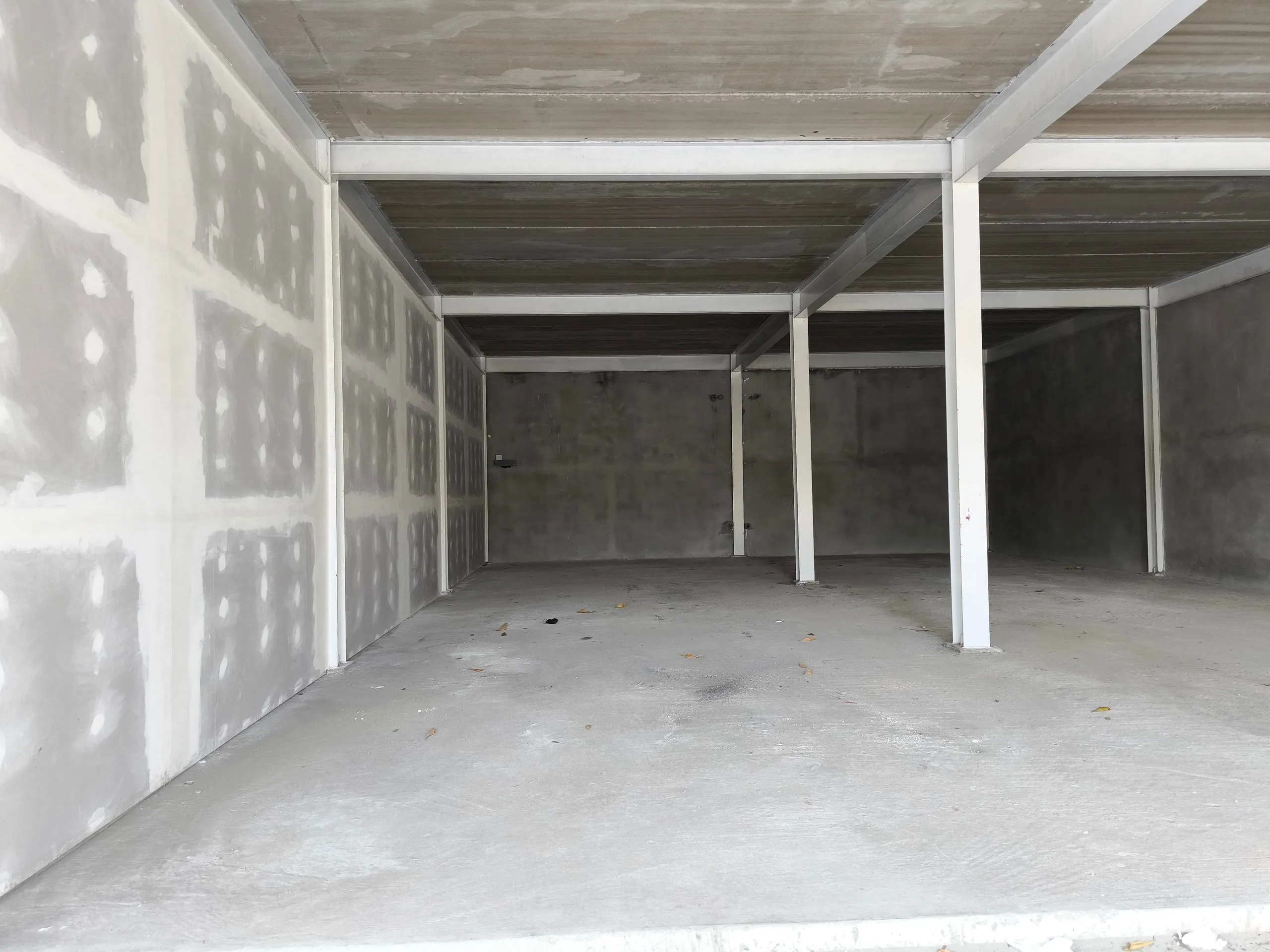
Drywall for warehouses and industrial buildings near the water and along the Route 1 corridor: high-bay partitions, in-shell offices and break rooms, demising walls between tenant units, and rated separations built for the height and the dust.
-
Medical & Healthcare Drywall
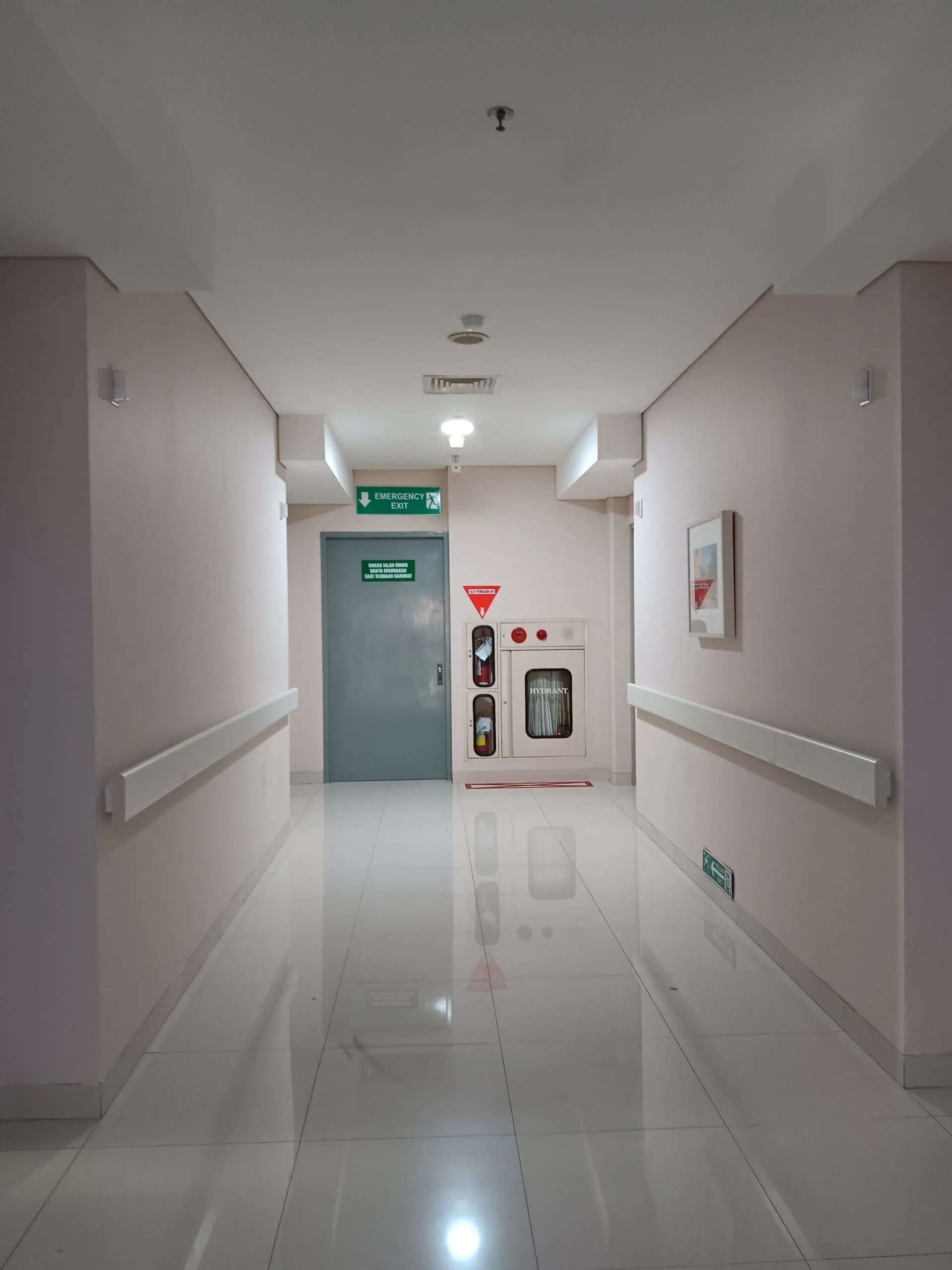
Drywall for medical and dental suites around Stamford Hospital and the High Ridge and Long Ridge medical offices: infection-control containment, lead-lined imaging walls, cleanable moisture-resistant finishes, and exam-room sound separation.
-

Retail & Restaurant Drywall
Drywall for retail and restaurant fit-outs from the Stamford Town Center to the downtown blocks and the High Ridge shopping areas: storefronts, demising walls, display-grade feature walls, and kitchen-area moisture detailing on a schedule built around opening day.
What commercial drywall takes in Stamford
Commercial work is project work, not service calls. Here is what separates a commercial sub from a residential contractor, and what the work actually involves across Stamford's building stock.
Commercial drywall in Stamford is project work that runs against a move-in date, not a service call. A tenant signs a lease, an architect issues a drawing set, a general contractor assembles the trades, and the drywall scope has to land on a schedule that the finish trades and the certificate of occupancy depend on. That is a different job from residential repair, and it asks for a different sub.
What separates a commercial sub from a residential contractor
It is not crew size. Commercial buildouts run on a CPM schedule, which means our start is keyed to the electrical and HVAC rough-in inspections, not to a calendar date we picked. They require a sub-permit with the building department, which we pull ourselves and inspect under. They close out with a documentation package the GC needs for the certificate of occupancy. And they are built to AWCI standards, which set the framing tolerances, the fastener schedules, and the finish quality levels that commercial finish work depends on. A residential contractor can hang and finish a wall. A commercial sub has to do that while coordinating inspections, protecting an occupied building, and producing paper at the end.
Where the work is in Stamford
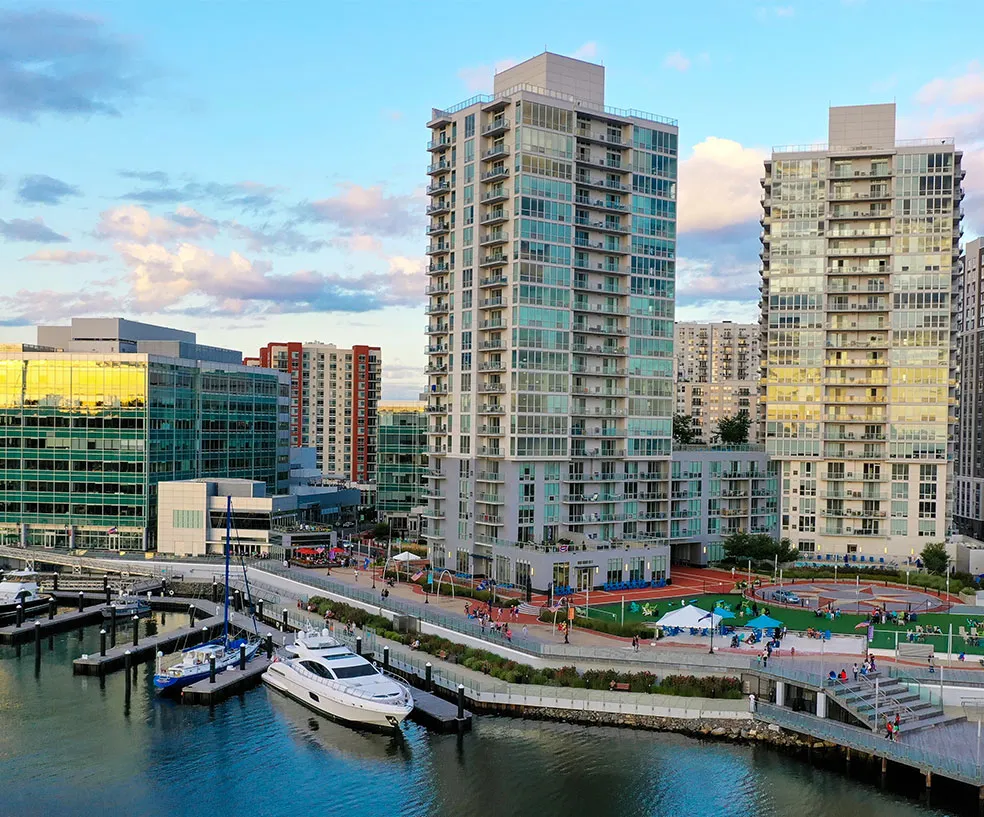
Downtown’s office corridor along Washington Boulevard, Tresser Boulevard, Atlantic Street, and Long Ridge Road carries continuous tenant-improvement demand from office churn, and Harbor Point in the South End keeps adding to it. The industrial and warehouse stock sits closer to the water and along the Route 1 and I-95 corridor, where the work is high-bay framing and demising walls between tenant units rather than executive offices. Medical offices cluster around Stamford Hospital on the West Side and up High Ridge and Long Ridge Road. Retail runs from the Stamford Town Center and the Bedford and Summer Street downtown blocks out to the High Ridge and Bull’s Head shopping areas. Each of those settings asks for something different from the drywall scope, which is why we treat them as separate kinds of work.
Fire-rated assemblies and code
When a project includes demising walls between suites, corridor separations, or stairwell enclosures, those walls are UL-listed fire-rated assemblies. A fire-rated assembly is a specific UL design number, not a board type: it specifies the board, the stud gauge, the fastener size and spacing, and the joint treatment required to hit the tested rating, and deviating from any element voids it. We identify the governing IBC section for each rated wall, install the correct UL design, and document the assembly for the CO file.
Finish levels
Standard commercial finish is GA-216 Level 4: joints and fasteners covered, surfaces consistent and ready for paint. Walls taking high-sheen paint, graphic wall coverings, or dimensional features, common in the law-firm and financial-services fit-outs downtown, need Level 5, which adds a full skim coat over the surface. We confirm the finish by area from the drawings before we start, because correcting a Level 4 wall to Level 5 after the fact is avoidable rework.
Frequently asked questions
Do you pull your own sub-permit on commercial projects, or does the GC? +
We pull our own sub-permit with the Stamford Building Department before mobilizing, and we coordinate the framing and fire-rated inspections that have to happen before board goes up. The GC gets permit documentation before we start. In the other Fairfield County jurisdictions we pull the permit that the local authority having jurisdiction requires.
What insurance and documentation do you carry for commercial work? +
Commercial general liability and workers' comp sized for commercial TI, plus CT DCP Home Improvement Contractor registration. We provide certificates of insurance naming the GC and owner as additional insureds, which is standard for commercial subcontract work here. Send us the limits or endorsements your contract requires before we execute the subcontract.
Do you work in occupied buildings, or only vacant suites? +
Both. In vacant suites we work standard hours on the GC's schedule. In occupied buildings we use corridor protection, control dust at the suite entrance, and coordinate noisy work with building management. In the downtown high-rises we schedule deliveries around service-elevator windows, and we know most of those buildings' access requirements before we show up.
How do you coordinate with the project schedule? +
We sync with the project manager at the start, not just our start date but the rolling schedule per phase, confirm against the electrical and HVAC rough-in inspection milestones, and build tape and finish around them. On multi-suite floors we stage material and crews so we are not congesting shared corridors and elevators.
What documentation do you provide for the certificate of occupancy? +
For every fire-rated assembly we record the UL design number, the board type and manufacturer, the framing gauge, the fastener schedule, and the joint treatment, assembled before final inspection and handed to the PM for the CO file. An assembly installed correctly but documented loosely can still hold up a CO, so we document it precisely.
Have a commercial project in Stamford?
Call and walk us through the scope. We work on the GC's schedule.
Call (475) 259-8175