Who this is for
- General contractors who need a drywall sub for an office TI on a fixed move-in date
- Property managers turning a suite over between tenants, back to open plan or a new layout
- Architects and designers who need a sub familiar with AWCI standards and phased schedules
- Business owners doing a direct fit-out on a leased suite who need the permit pulled and the AHJ handled
Office tenant improvement is the most common commercial drywall work in Stamford, and it lives downtown. The corridor along Washington Boulevard, Tresser Boulevard, Atlantic Street, and Long Ridge Road, plus Harbor Point in the South End, turns over suites continuously as leases roll and companies resize. The work is partitions, private offices, conference rooms, executive suites, and the constant conversion between open plan and enclosed layouts as one tenant leaves and another moves in.
What an office buildout actually involves
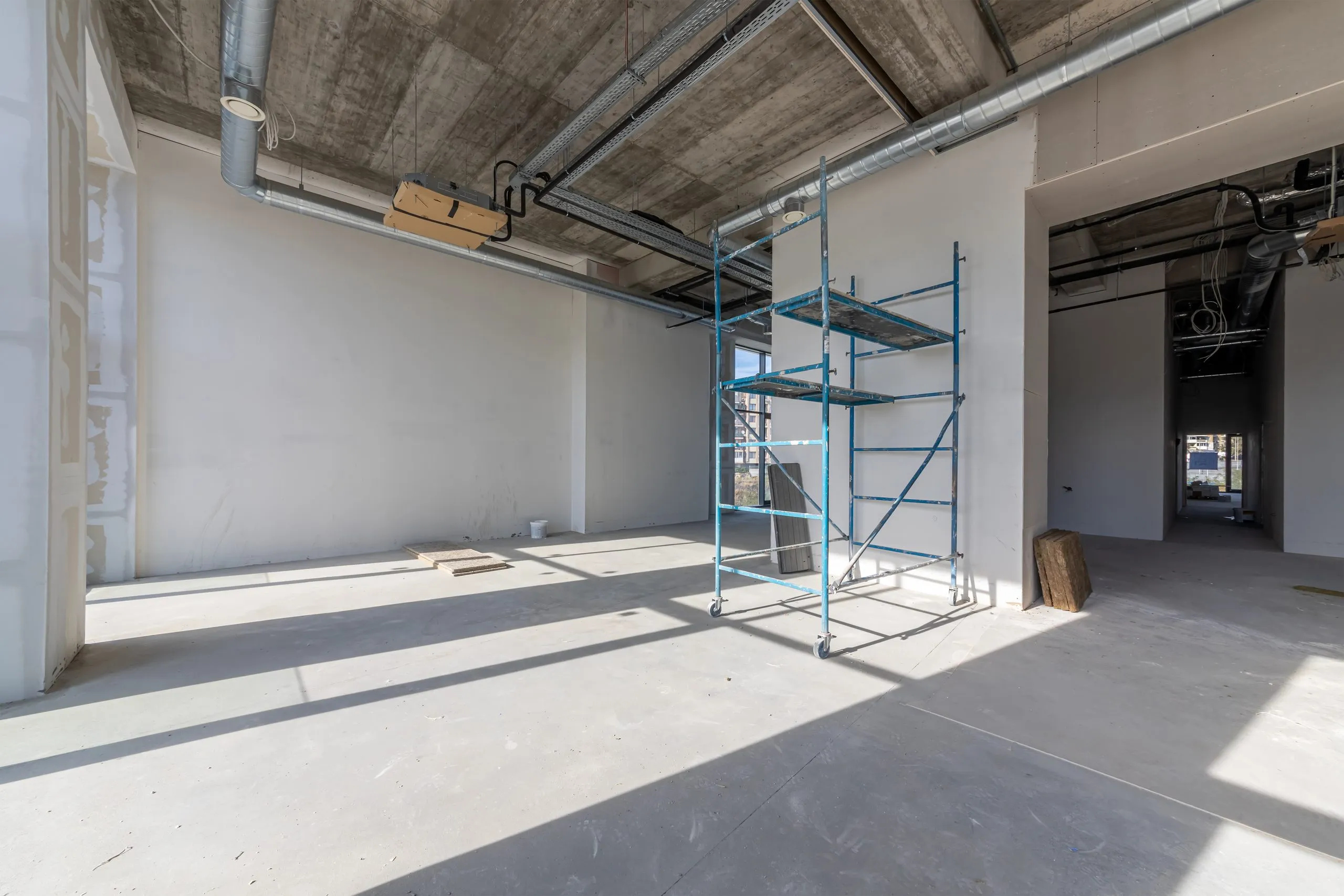
A buildout starts from the architect’s drawings and runs against a move-in date. We frame interior partitions in steel stud, 25 gauge for standard floor-to-ceiling office walls and 20 gauge where a wall is taller or carries lateral load, with blocking set for cabinets, fixtures, and wall-mounted screens before the board goes up. We hang and finish to AWCI standards, Level 4 across the painted office walls and Level 5 where the lobby, conference, and executive areas call for it. The whole scope is sequenced against the electrical and HVAC rough-in inspections so the finish trades behind us stay on schedule.
Demising walls and fire rating
Office floors frequently need fire-rated demising walls between suites and rated corridor separations. Those are not just heavier walls, they are specific UL design numbers under IBC Section 709 or 707, and the rating depends on the exact board, stud gauge, fastener schedule, and joint treatment. We identify the governing section for each rated wall, install the correct design, and document it for the certificate of occupancy file. If the project is a standalone rating upgrade without a buildout, that falls under our fire-rated assembly service instead.
The finish that downtown tenants ask for
The law firms and financial-services tenants along the downtown corridor tend to specify high-spec interiors: feature walls, high-sheen paint, and wall coverings that show every imperfection in the daylight off Long Island Sound. That is Level 5 territory, a full skim coat over the surface, and it is worth confirming room by room at bid because the finish level drives both the schedule and the look the tenant signed up for.
Working around the schedule
Office TI is schedule work. We coordinate directly with the project manager on the rolling schedule, stage material and crews on multi-suite floors so we are not congesting shared corridors and elevators, and we communicate changes in real time. A drywall scope that slips pushes every trade behind it and the certificate of occupancy with them, so we treat the schedule as part of the deliverable.
Materials & standards
Products & materials we use
- USG Sheetrock Type X and Type C for fire-rated assemblies
- QuietRock acoustic panels for conference and executive walls
- USG Beadex and Trim-Tex corner bead
Standards & codes we work to
- AWCI commercial drywall standards
- GA-216 finish levels, Level 4 and Level 5
- UL Fire Resistance Directory design numbers
- IBC Section 709 and 707 for demising and fire partitions
- CT State Building Code 2022
What the terms mean
- Tenant improvement and TI allowance
- Steel-stud framing, 25 and 20 gauge
- Demising wall and fire partition
- CPM schedule and rough-in inspection milestones
- Certificate of occupancy and CO documentation
The work this involves
The techniques that go into a project like this:
Frequently asked questions
Can you hit a fixed move-in date on an office buildout? +
That is the whole job. We key our start to the electrical and HVAC rough-in inspections rather than a date we picked, build the tape and finish schedule backward from the move-in, and flag schedule risk early so the finish trades behind us are not waiting. On a tight one we will run extended hours to hold the date.
What is the difference between Level 4 and Level 5 finish in an office, and when do I need Level 5? +
Level 4 covers joints and fasteners and is standard for painted office walls. Level 5 adds a full skim coat over the whole surface and is for walls taking high-sheen paint, vinyl, or graphic coverings in raking light, which is common in lobbies and executive and conference rooms. Most suites are mostly Level 4 with Level 5 in the feature areas. We confirm it by area from the drawings at bid.
Do you handle the conference-room sound separation? +
Yes. Conference rooms, executive offices, and any medical or legal suite that needs acoustic privacy get resilient channel or QuietRock panels and full-height partitions with the right detailing at the deck. We confirm which rooms need it from the drawings, because it changes the partition assembly and the floor area slightly.
Do you work in occupied office buildings downtown? +
Yes. We use corridor protection, control dust at the suite entrance, coordinate noisy work with building management, and schedule deliveries around the service-elevator windows in the high-rises. We already know the access requirements for most of the buildings along Washington and Tresser.