Who this is for
- Industrial property managers and owners building out or subdividing warehouse space
- Third-party logistics operators adding office, break, or QC areas inside a shell
- General contractors on industrial tenant improvements
- Developers turning a single warehouse into multi-tenant units with demising walls
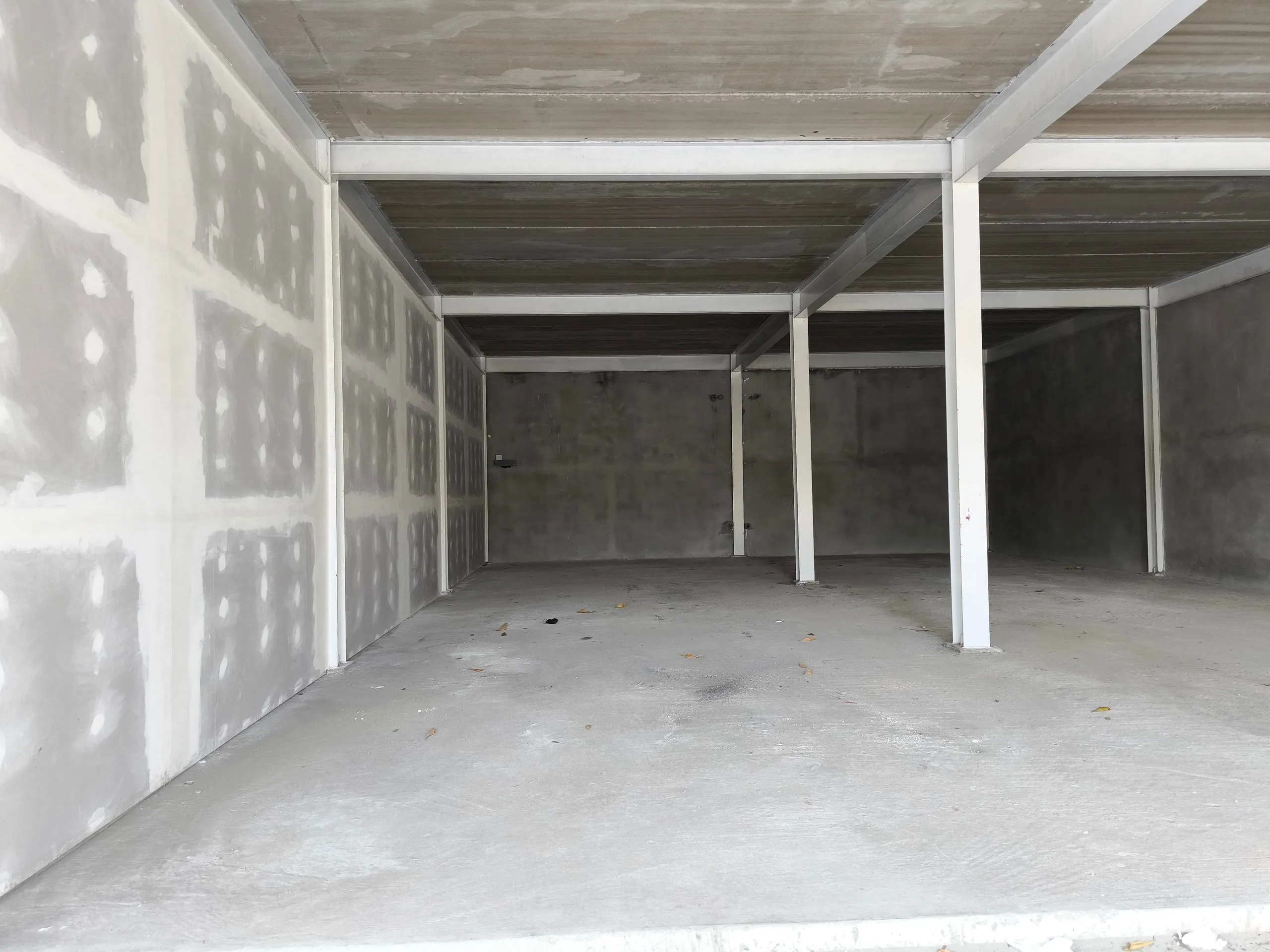
Warehouse and industrial drywall is a different animal from office work, and in Stamford it lives in a different part of town. The industrial stock sits closer to the water in the South End and Waterside and along the Route 1 and I-95 corridor, where the buildings are tall shells rather than finished floors. The drywall scope is high-bay partitions, offices and break areas built inside the shell, demising walls that split a single building into tenant units, and the rated separations that an industrial occupancy requires.
Why height changes everything
A warehouse partition can run fifteen, twenty, or more feet to the deck, and that height is the reason warehouse framing is its own skill. Standard 25-gauge office stud will not hold a tall wall straight, so we move to heavier structural-gauge stud, tighten the spacing, and detail proper deflection at the top track so the wall can move with the building without cracking the finish. A wall framed like an office wall but built warehouse height will wave, crack, and fail. Getting the gauge, the bracing, and the deflection right is the core of the work.
Demising walls and multi-tenant conversions
A lot of industrial work right now is splitting one warehouse into several tenant units. The walls between those units are demising walls, and they are almost always fire-rated under IBC Section 707 or 709. That means a specific UL design carried slab to deck, with the exact board, gauge, fastener schedule, and firestopping the rating calls for. We confirm the required rating for the occupancy, build the correct assembly, and produce the documentation the building department needs for the certificate of occupancy.
Building the offices inside the shell
Almost every industrial project includes a pocket of finished space inside the shell: offices, a break room, restrooms, a shipping or QC office. That part is closer to standard commercial framing and finish, but it has to tie cleanly into the taller shell partitions around it. We build both in one scope so the detailing where a finished office meets a high-bay wall is handled right, not left as a gap between two trades.
Dust, temperature, and finish
An active or unconditioned industrial shell is dusty and swings in temperature, and both work against joint compound. We contain the work area, plan the mud schedule around the conditions instead of forcing coats that have not dried, and reach for setting compounds when the ambient conditions call for them. The result is a finish that holds up in a building that was never meant to be climate-controlled like an office.
Materials & standards
Products & materials we use
- USG Sheetrock Type X for rated assemblies
- Heavier-gauge structural steel stud for high-bay walls
- Abuse-resistant and impact-rated board for high-traffic areas
- USG Sheetrock PURPLE for moisture-prone zones
Standards & codes we work to
- AWCI commercial drywall standards
- UL Fire Resistance Directory design numbers
- IBC Storage occupancy, S-1 and S-2
- IBC Section 707 and 709 for fire barriers and demising walls
- CT State Building Code 2022
What the terms mean
- High-bay framing and deflection
- Structural-stud gauge, 20 gauge and heavier
- Demising wall between tenant units
- Mezzanine and in-shell office
- Slab-to-deck partition
The work this involves
The techniques that go into a project like this:
Frequently asked questions
Why can't standard office framing be used in a warehouse? +
Warehouse walls run tall, often well past the ten-foot office ceiling, and at that height standard 25-gauge stud will not hold a straight, rigid wall. We move to heavier structural-gauge stud, tighter spacing, and proper deflection detailing at the top track so the wall stays plumb and the finish does not crack as the structure moves. Getting the gauge and the deflection right is the whole difference in industrial framing.
Can you build demising walls to subdivide a warehouse into multiple tenant units? +
Yes, and that is common as single warehouses get split for multiple tenants. Demising walls between units are usually fire-rated under IBC Section 707 or 709, which means a specific UL design built slab to deck, not just a tall partition. We confirm the required rating and occupancy, build to the correct design, and document it for the certificate of occupancy.
Do you build the office and break areas inside the shell? +
Yes. Most warehouse projects include a build of in-shell offices, break rooms, restrooms, and sometimes a QC or shipping office. That work is closer to standard commercial framing and finish, tied into the taller shell partitions around it. We handle both in one scope so the transition between the high-bay walls and the office areas is detailed correctly.
How do you deal with dust and temperature in an active warehouse? +
Industrial shells are dusty and the temperature swings, both of which affect joint compound drying and finish quality. We contain our work area, plan the mud schedule around the conditions rather than rushing coats, and use setting compounds where the ambient conditions call for them so the finish holds up.