
Signs you need this
- • A bumpy, dated popcorn or acoustic ceiling texture in a house built before the 1980s, now looking out of place against updated flooring, lighting, and paint
- • Yellowing or staining on the popcorn texture near a bathroom, kitchen, or older light fixture that won't clean off
- • A homeowner buying an older house in Westover, The Cove, or West Side and wanting to remove the ceiling texture before moving in
- • A renovation or a home purchase in Stamford's older housing stock makes the popcorn ceiling the last dated element in an otherwise updated room
- • Concern about what's actually in an older ceiling texture once a homeowner learns their house predates 1978
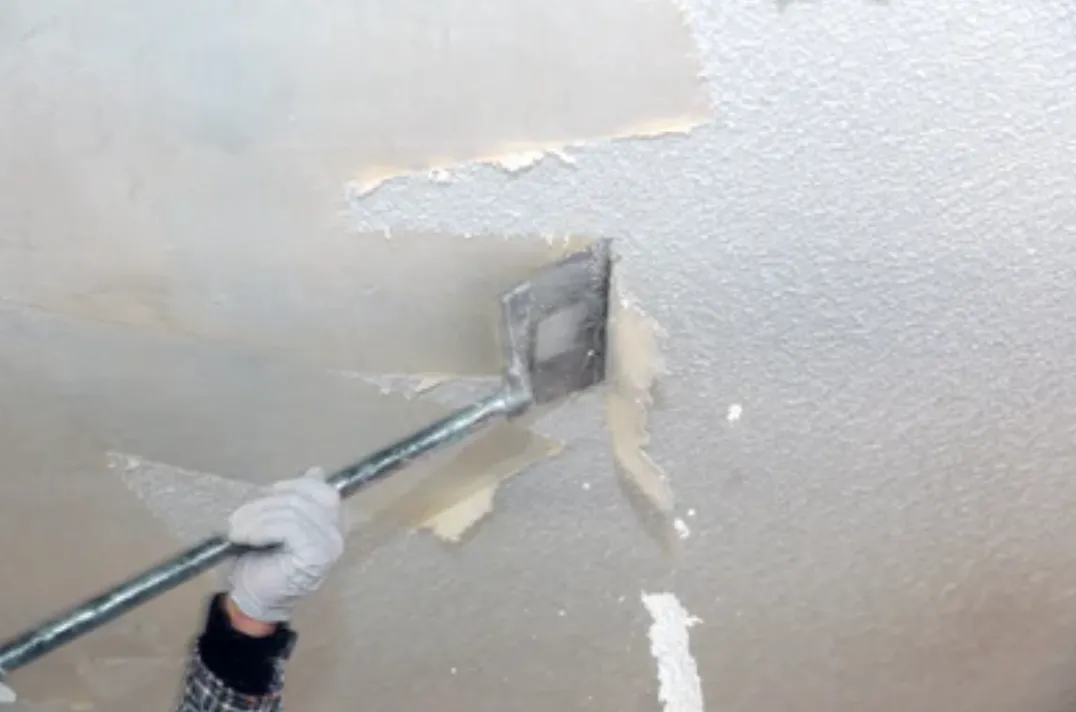
Stamford Elite Drywall removes popcorn and acoustic ceiling texture and refinishes the ceiling to a smooth, modern surface, starting with an asbestos-age test on any ceiling installed before 1980, since popcorn texture from that era commonly contained asbestos fibers as a fire retardant. Once a ceiling tests clear, the texture is wetted and scraped back to the board, the surface is skim coated and sanded to a smooth or lightly textured finish, and it’s primed and ready for paint. If a test comes back positive, the ceiling is handled through licensed abatement rather than a standard scrape, and that step happens before any drywall work proceeds.
The test that has to happen before anything gets scraped
Popcorn ceiling removal in an older house isn’t a job that starts with a scraper, it starts with a phone call to find out when the house was actually built and, if that date lands before roughly 1980, a test of the ceiling material itself. Spray-applied acoustic and popcorn textures from that era commonly used asbestos fibers as an inexpensive fire retardant, and disturbing that material by dry-scraping it without testing first is how a routine cosmetic update turns into an airborne hazard. Westover, The Cove, and West Side carry a lot of this exact housing stock, single- and two-family homes built well before 1978, the same era that keeps EPA RRP lead-safe practice relevant across renovation work generally in Stamford. Stamford Elite Drywall treats the age of the house as the first data point in any popcorn removal quote, not an afterthought mentioned after the scraping has already started. If a test comes back positive, the job routes to licensed abatement before any drywall work resumes, full stop, no shortcuts around that sequencing regardless of how much a homeowner wants the ceiling done that week.
Once a ceiling tests clear, or the home postdates the relevant era entirely, removal itself is a controlled process, not a demolition. The texture gets wetted down before scraping starts, which does two things: it keeps dust from becoming airborne and filling the house’s HVAC system, and it softens the texture enough to come off the board cleanly instead of gouging the paper facing underneath. Scraping too dry, or too aggressively, is how a popcorn removal job turns into a drywall repair job, tearing through the paper facing and requiring a skim coat over damaged board rather than a clean surface.
What’s actually left once the texture is gone, and why it needs a real finish
Stripping popcorn texture doesn’t reveal a finished ceiling underneath, it reveals raw board with the fastener pattern and joints from whenever the house was built, often decades-old technique that wasn’t intended to be seen. That surface needs a real skim coat and sanding pass to reach a usable finish level, whether that’s a standard smooth ceiling or a fully smooth Level 5 result for a room where lighting will show every imperfection. Skipping this step, or treating it as a quick coat of primer over the scraped surface, is how a popcorn removal ends up looking almost as dated as the texture it replaced, just smoother and still uneven. Stamford Elite Drywall treats the post-scrape finish as its own deliberate stage: assess what condition the board is actually in once the texture is off, patch or overlay where the surface won’t take a clean skim, and finish to whatever level the room’s lighting and the homeowner’s expectations call for, so the ceiling reads as genuinely renovated, not just stripped.
Materials & standards
Products & materials we use
- USG Sheetrock
- Joint compound (setting and pre-mixed)
Standards & codes we work to
- EPA RRP
- GA-214 finish levels (0-5)
- EPA RRP Lead-Safe Certified Firm
- CT Home Improvement Contractor (HIC) registration
What the terms mean
- Popcorn ceiling
- Asbestos testing
- Textured ceiling removal
- Skim coat
- Ceiling refinish
Options & variants
| Option | When it applies | Cost |
|---|---|---|
| Scrape and smooth-finish | Ceiling tests clear, homeowner wants a standard smooth finish | Baseline |
| Scrape and skim to Level 5 | Ceiling tests clear, homeowner wants a fully smooth, plaster-like finish | Higher, more labor |
| Overlay with new board | Existing ceiling is too damaged or uneven to scrape and refinish cleanly | Higher, added material |
| Abatement referral | Asbestos-age test comes back positive | Handled by licensed abatement, then drywall work resumes |
What affects cost
- • Whether the ceiling needs asbestos-age testing based on the home's construction date
- • Condition of the ceiling underneath — patchable versus needing a full overlay
- • Room size and ceiling height — higher ceilings and stairwells take more setup
- • Finish level chosen after scraping — standard smooth versus a full Level 5 skim
- • Number of rooms done at once versus a single room
What to expect
- 1
Confirm construction date
Confirm the home's construction date and test the ceiling texture if it predates 1980.
- 2
Prep and wet
If clear, protect the room and wet the texture before scraping to control dust.
- 3
Scrape and inspect
Scrape back to the board and inspect the surface underneath for damage.
- 4
Skim, sand, finish
Skim coat, sand, and finish the ceiling to the chosen smooth or light-texture level.
- 5
Prime and walkthrough
Prime and walk through before the room is handed back for paint.
When this isn’t the right call
- If the ceiling itself is sagging, cracked, or water-stained rather than just texturally dated, ceiling installation and repair is the better fit.
- If the goal is a full plaster-smooth Level 5 finish across the whole room, not just the ceiling, a skim coat to Level 5 finish is the better fit.
Frequently asked questions
Do all popcorn ceilings need asbestos testing before removal? +
Any ceiling installed before roughly 1980 should be tested before scraping, since that era's popcorn texture commonly used asbestos as a fire retardant. Stamford's housing stock includes plenty of pre-1978 homes in Westover, The Cove, and West Side where this test is standard practice, not optional.
What happens if the test comes back positive? +
The ceiling is handled through licensed asbestos abatement rather than a standard scrape. Once abatement is complete and the space is cleared, Stamford Elite Drywall proceeds with the drywall finish work.
How messy is popcorn ceiling removal? +
It's dusty work if done dry, which is why the texture is wetted before scraping to control airborne dust, and the room is protected and contained for the duration of the job.
Can you do just one room instead of the whole house? +
Yes, popcorn removal is commonly done room by room, a primary bedroom or living room first, rather than all at once.
What does the ceiling look like after the popcorn is removed? +
After scraping, the surface is skim coated and sanded to whatever finish level is chosen, a standard smooth ceiling or a fully smooth Level 5 finish, then primed for paint.
Is there a cheaper alternative to removing the popcorn entirely? +
In some cases a new layer of board can be installed directly over an existing ceiling that's too damaged to scrape and refinish cleanly, though scrape-and-refinish is the standard approach when the ceiling underneath is in reasonable shape.